
-
About
-
Products
- By Timber Product
- Cladding
- Decking
- Screening
- Panelling
- View all
- By Application
- Exterior Cladding / Siding
- Exterior Rain Screen
- Interior Walls & Ceilings
- Soffits
- Screening, Fins & Battens
- Windows, Doors & Joinery
- Posts & Beams
- Accessories
- Coatings
- Fixings
-
Resources
- Projects
- Contact





New research is shedding light on the valuable role planted forests can play in absorbing methane.
The Role of Planted Forests in Offsetting Methane Emissions
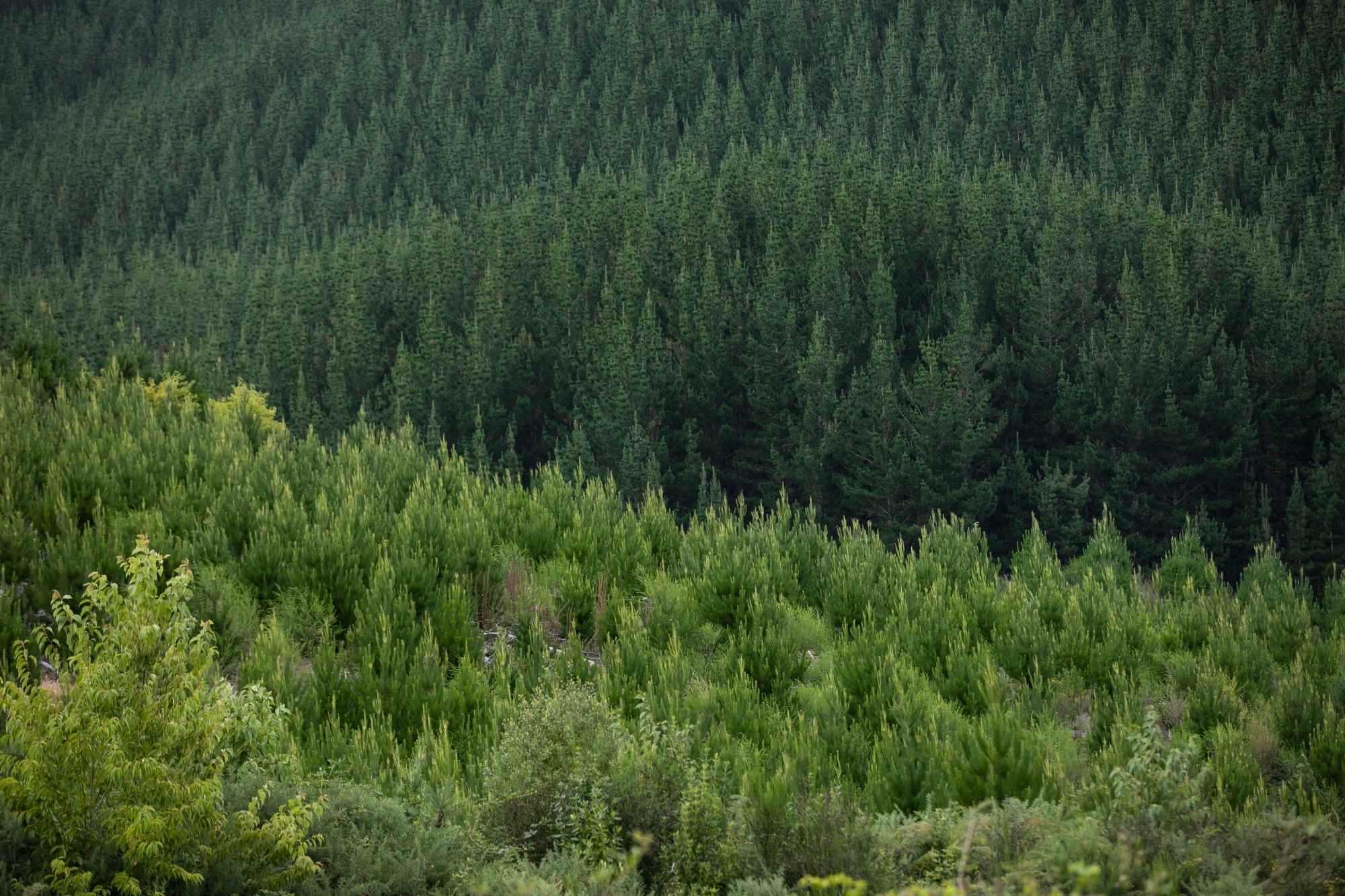
For two years, the team at Bioeconomy Science Institute Maiangi Taiao has been researching how soils absorb methane in three planted forests: Orton Bradley Park and McLeans Island in Canterbury and Kaingaroa in Bay of Plenty. The goal of this study, supported by Lincoln University and funded by the Ministry for Primary Industries, was to help the agriculture sector in its continued efforts to reduce greenhouse gas emissions.
With Abodo sourcing Radiata pine from Kaingaroa region, we were eager to see and share their results.

Methane project research lead Kathryn Walker
The Methane Challenge and Opportunity
A potent greenhouse gas, methane (CH4) causes roughly 30% of global warming, and over a 100-year period, has a warming effect 27-30 times stronger than carbon dioxide (CO₂). It has a strong warming influence, but also has a relatively short atmospheric lifetime. This means that, by reducing methane emissions, we can seize an immediate opportunity to slow climate change and provide significant environmental benefits within decades.
Planted Forest Soils: A Good Habitat for Methane Absorption
Researchers in this study set out to learn how much methane is being absorbed by the bacteria in planted forest soils in the hopes of better understanding the role these spaces can play in meeting New Zealand’s emission-reduction targets. There were 12 methane flux chambers installed at each of the three planted forest sites, with monthly measurements taken across a year to demonstrate how much methane was being absorbed in the soil.
Monitoring showed that 2.5-2.8kg of CH4 was absorbed per hectare each year, with up to 15g being absorbed per hectare every day. “Considering New Zealand has 1.8 million hectares of planted forests, that’s a significant amount of methane being removed by forests each year,” says Dr Kathryn Walker, Lead Researcher. Zooming out, she says this level of methane uptake could offset nearly all of the CO2 emissions from liquid fuels used in New Zealand railways in 2022, or about 80% of CH4 emissions from natural gas production.
The Call for Future Research
This initial study found that planted forest soils are effective methane sinks and provide a resource that could help New Zealand meet its emissions reduction targets, but there is still a lot to be done to understand the full methane cycle in planted forests and what other aspects might contribute to their methane flux. “These other components need to be considered and measured before methane uptake by forest soils is included in national greenhouse gas budgeting,” Kathryn says.
Kathryn and her team are now pressing ahead with additional research, funded by the Strategic Science Investment Fund (SSIF), to explore how methane uptake can be increased through the addition of nutrients or the targeted management of tree litter.

One More Piece of the Sustainability Puzzle
At Abodo, we are committed to building the future of timber responsibly, together. Through innovation and sustainable growing practices, we are delivering feature timbers in decades, rather than cutting down centuries of history. And we’re working hard to ensure that environmental best practice is woven into every step of our value chain.
Studies like this one help us to better understand the true potential of rapidly renewable Forest Stewardship Council® (FSC®) certified timbers in building the future of New Zealand and protecting our planet for future generations.
Related Articles

10 Myths About Planted Pine Forests
Debunking common myths about planted pine forests and their impact on ecosystem health.

The Impact of Pine Forests on Soil Health
Learn how rapidly renewable plantation forests can aid soil biodiversity and climate resilience.

Supporting Soil Health Through Well-Managed Pine Forests
Learn how New Zealand’s approach to forestry has changed over the past generation and how well-managed plantation forests can maintain or improve soil health.